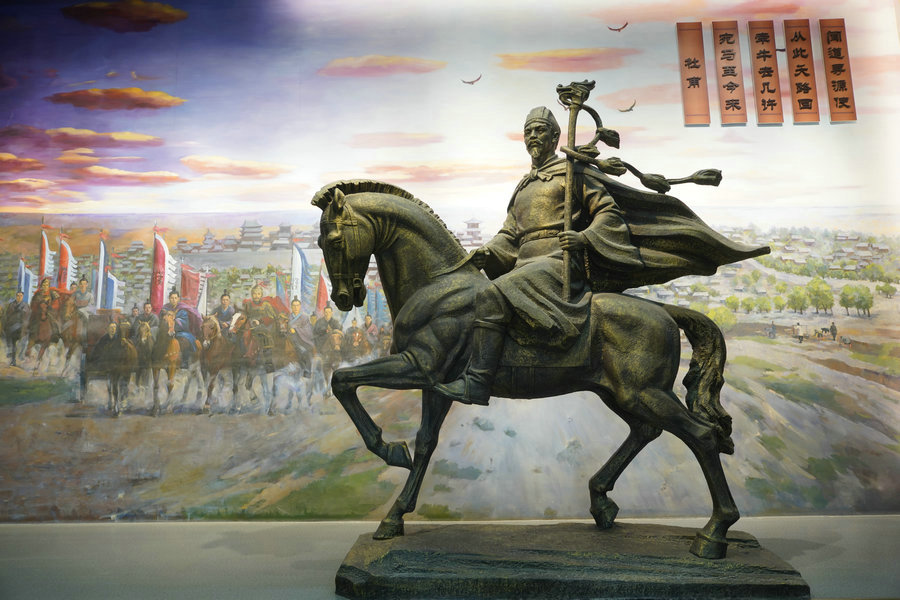
Zhang Qian
Introduction
Zhang Qian (164-114 BC) was a Chinese diplomat and explorer who is best known for his pioneering travels in the Western Regions, which played a crucial role in the development of the Silk Road. As an envoy for Emperor Wudi of the Han Dynasty (206 BC-AD220), he embarked on a series of expeditions that helped to establish relations and open trade routes between China and Central Asia. His journeys not only paved the way for economic exchanges but also facilitated cultural interactions between the East and West.
Early Life and Initial Mission
Zhang Qian's journey began in 138 BC when he was tasked by Emperor Wudi to forge an alliance with the Greater Yuezhi, a nomadic tribe in Central Asia, against the hostile Xiongnu. Setting out from Chang'an (modern Xi'an), Zhang's journey was fraught with challenges, including a ten-year captivity by the Xiongnu, which delayed his mission. However, his eventual escape and continued westward travel marked the beginning of his extensive explorations.
Contributions to the Silk Road
Zhang Qian's explorations significantly contributed to the opening of the Silk Road, a network of trade routes that connected China with the Mediterranean and Rome. His travels through the varied terrain of deserts, grasslands, and mountains facilitated the exchange of goods such as silk, spices, and other commodities. Moreover, his reports upon returning to China enriched the Han court's understanding of distant lands and cultures, influencing future diplomatic and trade missions.
Cultural and Economic Impact
The Silk Road, bolstered by Zhang Qian’s expeditions, became a vital corridor for cultural and economic exchange. It introduced new agricultural products like grapes, pomegranates, and alfalfa to China. The trade of silk and other goods along this route not only enhanced China's economy but also its cultural landscape, as it exchanged ideas, art, and technology with diverse civilizations.
Legacy and Modern Recognition
Zhang Qian’s legacy as a diplomat and explorer endures through the enduring significance of the Silk Road. His pioneering efforts in connecting China with the Western world are celebrated in various historical and cultural commemorations, including exhibitions and memorials.
Zhang Qian's contributions are recognized in contemporary cultural and educational contexts. Events, documentaries, and exhibitions focused on the Silk Road and Zhang Qian’s journeys continue to educate and inspire new generations. The Belt and Road Initiative, a modern development strategy by China, draws inspiration from the historical Silk Road, emphasizing Zhang Qian’s lasting influence on international trade and cultural exchange.








